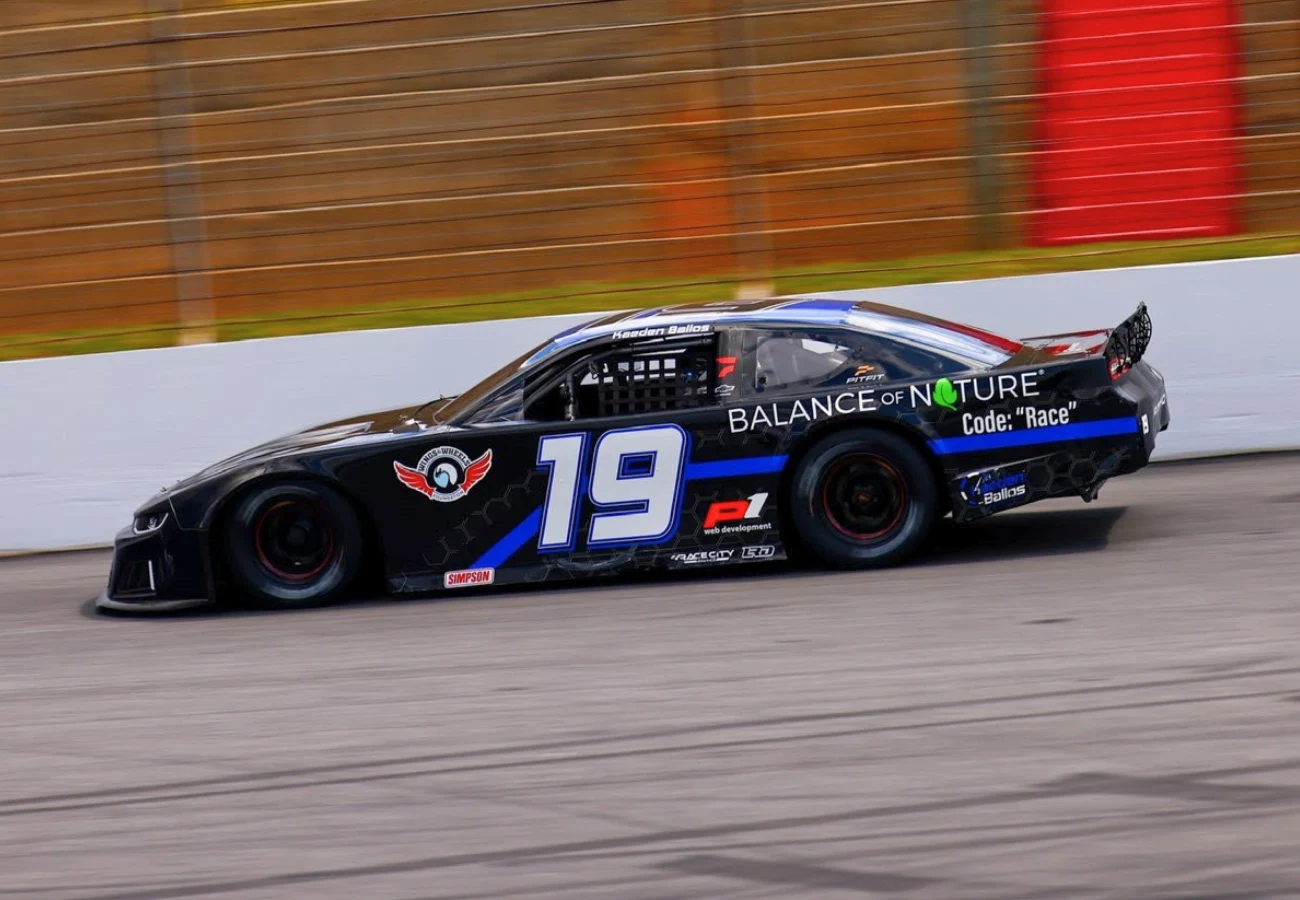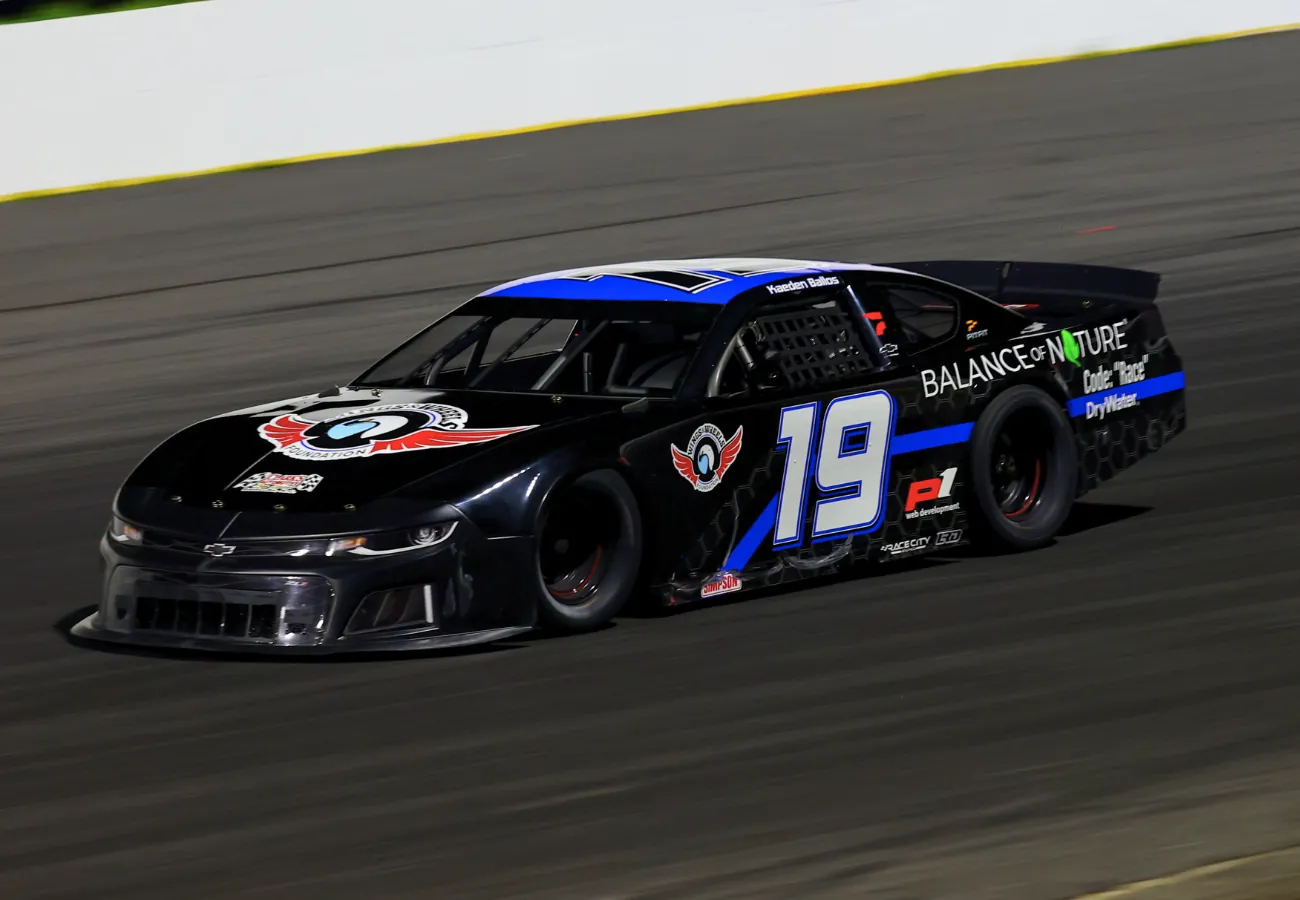
Picture a driver in the middle of a Late Model Stock season. Race weekends stacked up, a heavy car, real competition every time the green flag drops. Now picture that same driver climbing into a go-kart on a random week between races.
That is exactly what Kaeden Ballos is doing right now. And it is not what most people expect.
So why do race car drivers train in go-karts, especially one already competing at a higher level? For Kaeden, the answer is simple. Getting better does not wait for the offseason. It happens between the race weekends, in the work nobody sees.
Development Does Not Take a Break
Kaeden is putting in that work at Trackhouse Motorplex under driver coach Sergio Campos. This is not an offseason catch-up. It is happening in-season, right alongside his Late Model schedule.
Most people treat karting as where you start out, or where you go when the season goes quiet. Kaeden treats it as an ongoing tool. He races the Late Model and sharpens in the kart at the same time, and every session is another chance to find speed.
Two Engines, Two Completely Different Driving Styles
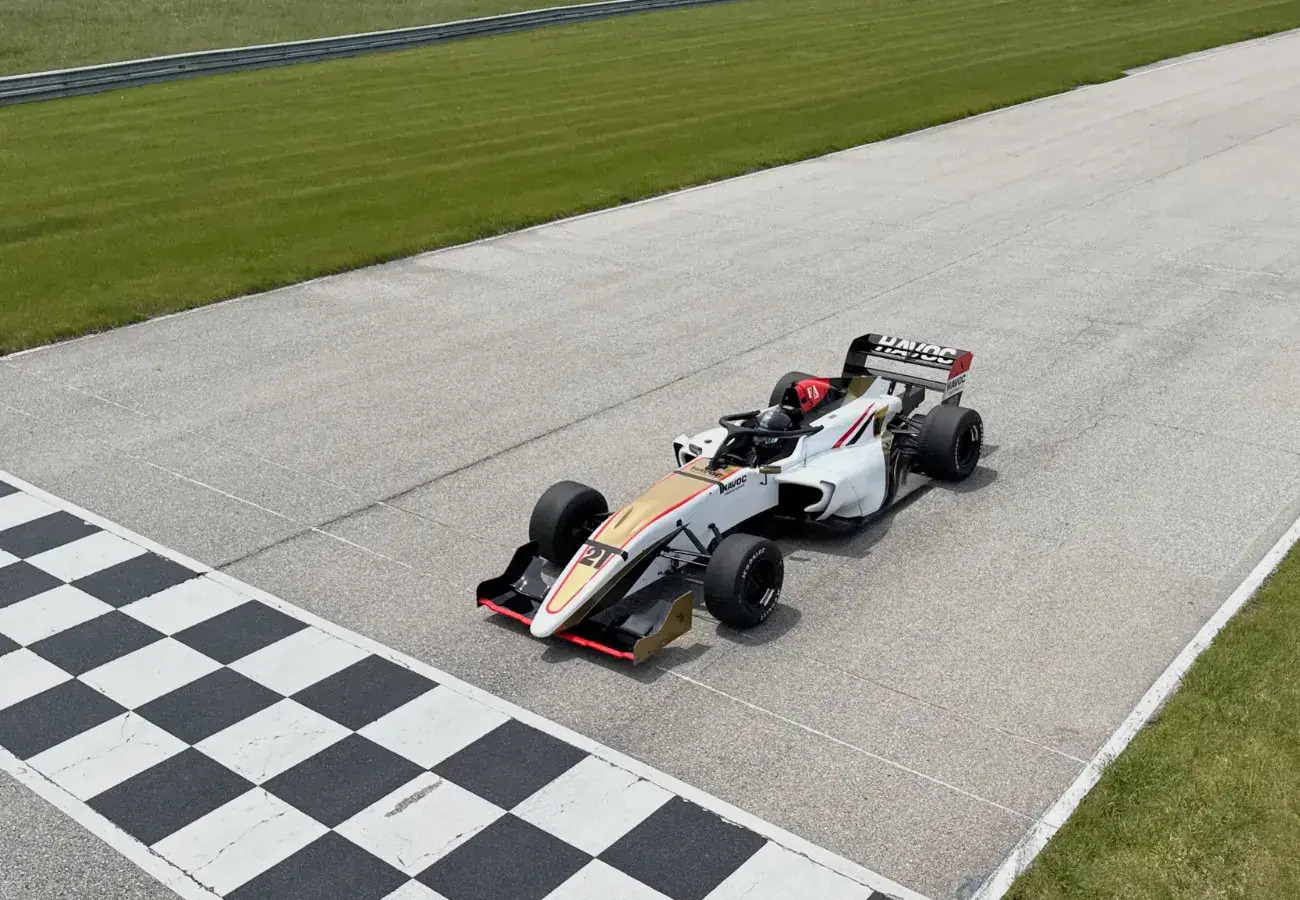
Kaeden trains in two kart platforms, the Briggs 206 and the KA100. They are not just faster and slower versions of the same thing. They demand two different driving styles, and that is the point.
The Briggs 206: All About Momentum
The 206 does not have much raw horsepower, so the whole game is keeping your momentum through the middle of the corner without bogging the engine down. That comes down to entry speed.
Get your entry speed wrong and you have to slow down too much mid-corner. The engine bogs. And because the 206 cannot bail you out with power, you drag that lost speed all the way down the next straight.
The 206 cannot cover up a mistake. That is what makes it a great teacher. It forces discipline, because there is nowhere to hide a sloppy corner.
The KA100: Where Braking Wins or Loses
The KA100 brings the horsepower, and that changes everything. Add speed and braking becomes the make-or-break skill. This is where trail braking comes in.
Here is the plain version. You hit the brakes firm at the start, then slowly let off, and that progressive release is what rotates the kart the rest of the way through the corner. Pair it with slight, deliberate steering inputs instead of yanking the wheel, and the kart sets itself up for the exit.
Firm in, smooth out. At KA100 speeds, getting it right is the difference between a clean corner and a wasted one.
Put the two platforms together and you develop two halves of a complete driver. The 206 teaches corner-speed discipline. The KA100 teaches braking precision.
Why a Kart Is Such a Brutal Teacher
A kart gives you nowhere to hide. The steering and brake setup is so tight and direct that you have to be precise with everything. One mistake costs you tenths of a second, and depending on where it happens on the track, it only compounds.
A stock car can mask some of that. A kart will not. It is a magnifying glass on every habit a driver has, good or bad. That is exactly why a driver already racing a Late Model still gets sharper running laps in a kart.
The Data Behind Every Lap
Feel only takes a driver so far, and karting has a wrinkle most people never think about. In a kart, your body is part of the setup. The way you lean, where you put your weight, how you load the chassis, all of it changes how the kart handles.
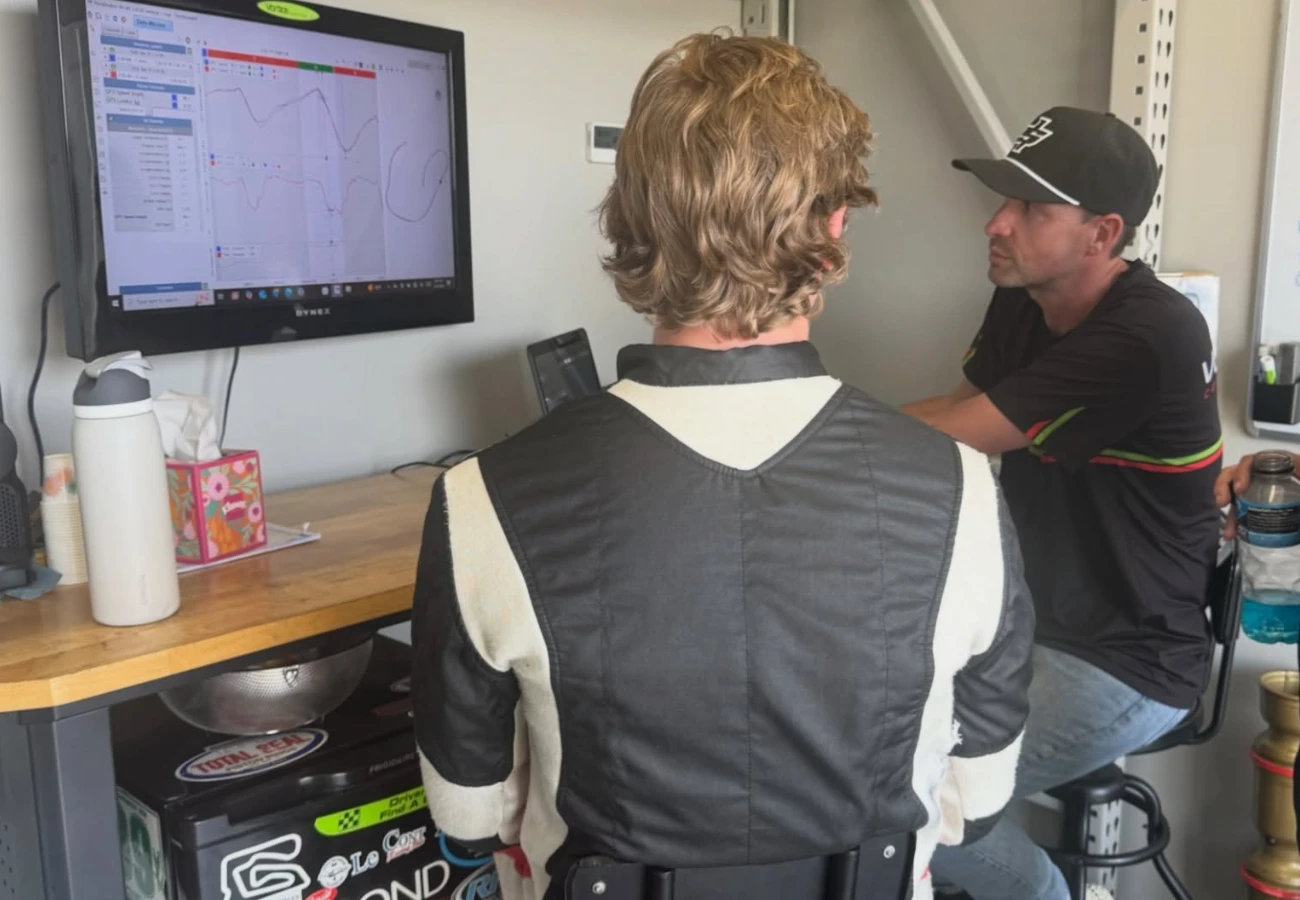
The data shows the results of each body lean and how it translates to mid-corner speed. So instead of guessing what felt right, Kaeden can see what actually was right.
The Engineer Reading the Data: Sergio Campos
This is where it matters exactly who Kaeden is working with. Sergio Campos is not a coach who just shouts encouragement over the radio. He is a race engineer, and that changes what a driver takes away from every session.
Campos co-founded ProKart, a driver development program based in Mooresville, North Carolina, right in the heart of Race City USA. He built it with businessman Andre Machado to do more than chase trophies. ProKart’s whole philosophy is educating drivers in every facet of motorsports, blending track craft, tuning, and the business side of the sport into one program.
That engineering mind is the difference maker. Plenty of coaches can tell you that you were slow. Campos can look at the trace data and pinpoint exactly what steering and braking input needs to be adjusted to get the most out of every corner.
The driver feels the kart from the inside. The engineer sees the pattern in the data that the driver cannot feel. Together, they turn a good corner into a great one, and they keep doing it corner by corner until the whole lap comes together.
The Real Transfer Is the Mindset
Seat time keeps Kaeden sharp, and that alone is worth it. But the biggest thing carrying over to his Late Model is the analytical side of all this.
Learning to read data, connect an input to a result, and make a precise adjustment is a skill that does not care what you are driving. Kart or Late Model, the discipline is the same. Study the data, find the change, make the corner better.
That mindset is what makes him faster in everything he drives, and it is the kind of skill that keeps paying off as his career climbs.
Serious About the Work Nobody Sees
So, why do race car drivers train in go-karts? Because the great ones know races are not won on race day alone. They are won in the work between the weekends.
Kaeden Ballos is doing that work right now, in-season, when he could easily wait for the next green flag. That is what separates a driver serious about development from one who only shows up on race day.
Every lap at Trackhouse Motorplex is another investment. And Kaeden is all in.